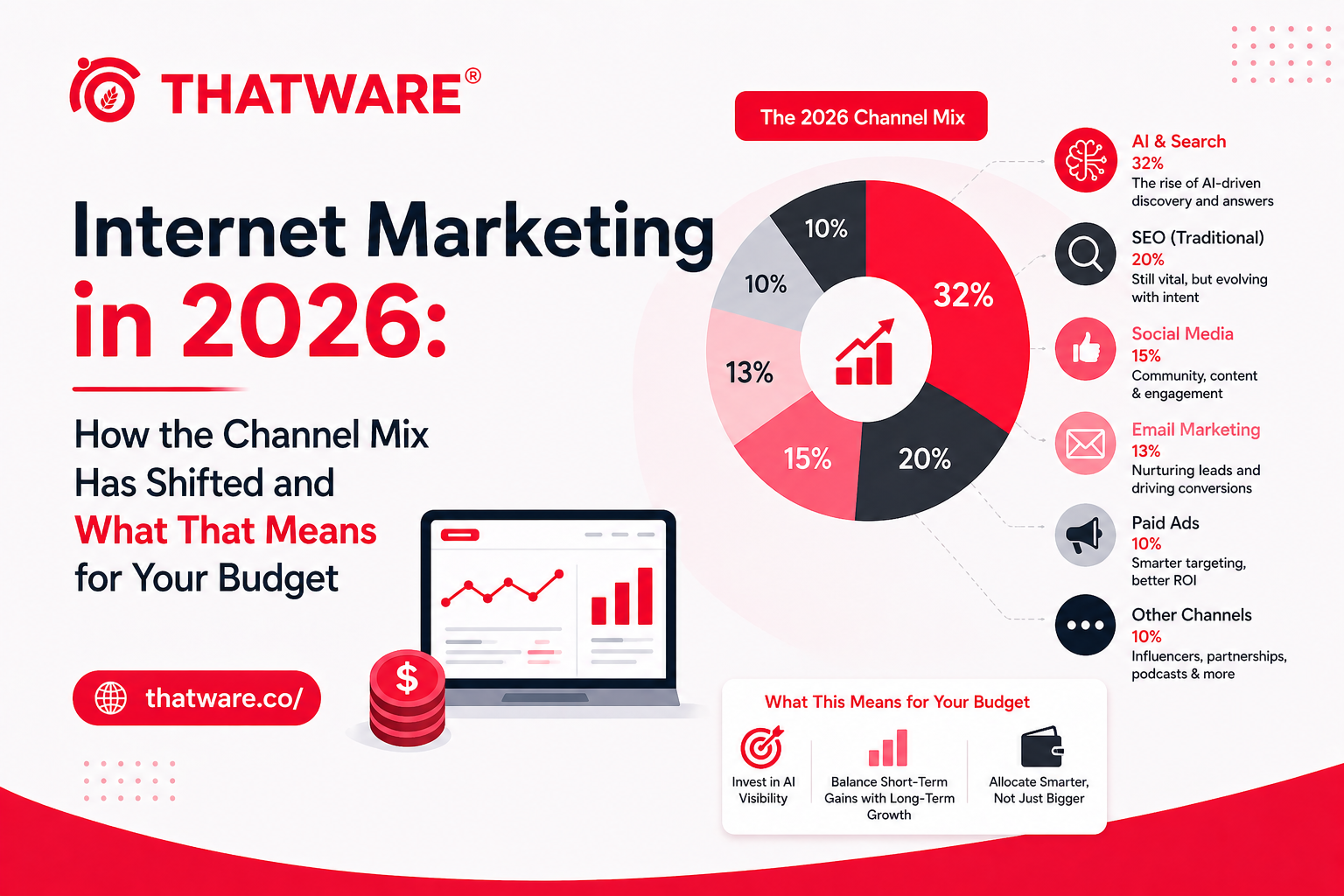
The digital marketing channel mix that makes sense in 2026 looks meaningfully different from what made sense in 2022. Some channels have gained ground. Some have lost it. Several entirely new surfaces have emerged that weren’t meaningfully part of the conversation three years ago. And the relationships between channels – how they reinforce or undermine each other – have shifted in ways that matter for how budgets should be allocated.
Most marketing teams are running a 2022-vintage channel mix with 2026 budgets. The allocation decisions made three or four years ago made sense at the time. Refreshing them with an honest look at how the environment has changed is worth doing.
What’s Changed in Paid Search
Paid search has gotten more expensive and more complex simultaneously. CPCs in competitive categories have risen significantly as more advertisers compete for the same queries. Google’s smart bidding systems have improved the efficiency ceiling for well-resourced accounts but made it harder to achieve results with limited budget and data. Performance Max campaigns have shifted control away from advertisers in ways that benefit Google’s revenue optimization and may or may not benefit advertisers’ outcomes. Also read: Packing Tips for Preserving Valuable Artwork in Climate Controlled Units
The search landscape that paid search intersects has also changed. AI Overviews now appear above paid results for many queries, reducing click-through rates from both paid and organic positions. The net effect: paid search is becoming more expensive for less consistent traffic, especially for informational queries where AI Overviews are most prevalent.
For brands with mature organic search performance, the case for reducing paid search investment in favor of organic and AI search investment has gotten stronger. For brands with undeveloped organic presence, paid search remains necessary but should be viewed more explicitly as a bridge to organic capability building, not a permanent substitute.
Social Media: Reach vs. Revenue Reality
The social media channel picture in 2026 is more fragmented than ever – TikTok, Instagram, YouTube Shorts, LinkedIn, Pinterest, X, emerging platforms – and the question of where budget should go is genuinely difficult. The honest answer: for most B2B and complex B2C brands, organic social’s reach has declined to levels where the ROI of significant organic social investment is weak relative to alternatives. Also read: Where Minitec Extruded Aluminum Framing Becomes the Better Option for Machine Guarding
Paid social remains viable for specific use cases: brand awareness at scale for consumer brands, lead generation for B2B brands where LinkedIn’s professional targeting is relevant, retargeting audiences developed through other channels. But the “always on” paid social approach – constant campaigns running across multiple platforms – has become expensive relative to its measurable impact on revenue for most brands outside of well-funded consumer categories.
The channel that deserves more attention than it typically gets: YouTube. Long-form video content builds genuine authority and trust in ways that short-form social doesn’t. YouTube’s search functionality means content has long-tail visibility that other social platforms’ feeds don’t provide. And YouTube content increasingly surfaces in AI-generated research responses for topics where video explanation is genuinely useful.
Email: Consistently Undervalued, Still Compounding
Email’s trajectory in marketing budget allocation over the past decade has been consistent and consistently wrong: brands underinvest in email relative to its actual revenue contribution. It’s less exciting than social. It doesn’t have the impression metrics that look good in reports. It doesn’t generate the brand awareness that executives notice. Also read: Discover the Best Solar Companies and the Top Solar Company in Pune for a Greener Future
But email revenue attribution, when measured carefully, consistently shows higher ROI than almost any other channel for brands with established email programs. In e-commerce, lifecycle email programs – welcome sequences, abandonment recovery, post-purchase, winback – typically account for 20-30% of total revenue from programs that are well-executed. In SaaS, email nurturing sequences drive a significant share of trial-to-paid conversion. In B2B, email is often the primary channel keeping deals warm through long sales cycles.
Internet marketing company strategies that recommend significant email investment relative to social investment are usually giving sound advice that runs against the grain of where most marketing teams allocate budget. The disconnect between email’s actual revenue performance and its budget allocation is one of the most consistent inefficiencies in digital marketing.
The Organic + AI Channel Opportunity
The biggest channel allocation story in 2026 is the integration of organic search and AI search visibility into a unified strategy. These are not separate channels – they share a foundation of topical authority, content quality, and entity credibility – but they require different measurement and some different optimization work. Also read: Reasons Why Robotics Engineering Companies in Alabama Are Essential for Consistent Steel Quality
Online marketing services that don’t include AI search visibility as an explicit component of their organic strategy are operating with an incomplete channel map. As AI-mediated search grows as a share of total search activity, brands without AI search presence are progressively losing visibility in the channel that’s growing fastest.
The budget implication: organic and AI search investment should be treated as a unified line in the marketing budget, not separated into “SEO” and “AI search” as if they were competing for resources. The foundation investment – content, technical health, authority building – serves both surfaces. The AI-specific overlay – AI visibility monitoring, schema optimization for AI extraction, off-site authority for AI citation – is a relatively modest addition to the organic investment that delivers disproportionate returns as AI search grows.
The Channel Mix Audit Worth Doing
Before refreshing the 2026 marketing budget allocation, a practical channel audit worth conducting: for each active channel, what’s the actual revenue contribution (not the last-touch attribution, but a full-funnel attribution model that credits assists), what’s the trend over the past 12-18 months, and what’s the marginal return on additional investment? Also read: Explore the Latest iPhone 16 Offers and Features at iPlanet
Most brands conducting this audit find two or three things: at least one channel that’s consuming more budget than its revenue contribution justifies (often paid social). At least one channel that’s underfunded relative to its revenue contribution (often email, often organic search). And at least one new surface – usually AI search visibility – that’s emerging fast enough to warrant explicit investment before the competitive window closes.
Reallocating budget from over-invested channels to under-invested ones, guided by an honest revenue-contribution analysis, consistently produces better marketing ROI than trying to optimize within a fixed allocation that reflects historical decisions rather than current opportunity. The channel mix assessment is overdue for most brands. 2026’s environment provides both the motivation and the specific opportunity to act on it.