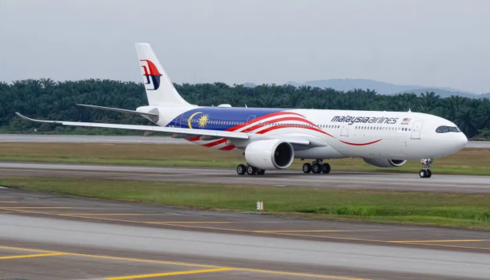
The decision between full-service and budget carriers on flights from Singapore depends on three variables that travellers often underweight — the total trip duration, the baggage requirements, and the timing reliability needs. When it comes to travel planning, finding the right book Singapore Airlines online option makes all the difference. The naive pricing comparison between a SGD180 Scoot fare and a SGD380 Singapore Airlines fare on the same route hides substantial cost differences once baggage, seat selection, meal add-ons, and on-time risk are factored in. The honest framework is to compare the all-in cost across realistic trip profiles rather than the headline base fare.
The All-In Cost Comparison
The all-in cost of a Singapore-Bangkok return flight on Scoot at SGD180 base typically reaches SGD230 to SGD280 once 20kg checked baggage (SGD30 to SGD55 each way), seat selection (SGD15 to SGD35), and one meal per direction (SGD12 to SGD22) are added. The Singapore Airlines equivalent at SGD380 base typically stays at SGD380 to SGD410 since baggage, seat selection, and meals are included. The pricing gap narrows from 110 percent to roughly 40 to 80 percent — meaningful but smaller than the headline suggests. For travellers needing to book Singapore Airlines online for the consistent service inclusion, the pricing gap typically justifies the upgrade on longer trip durations.
The Trip-Duration Threshold Also read: Gulf Coast Vacation Rentals: Experience the Best Beach Stay in Gulf Shores, Alabama
A clear pattern emerges across trip duration. For 1-to-2-day overnight trips with minimal luggage, the budget carrier wins consistently — the inconvenience of separate baggage, meal, and seat purchases doesn’t accumulate. For 5-to-10-day trips with 20kg+ checked baggage, the full-service carrier wins on all-in cost roughly 60 percent of the time, particularly on shoulder-season bookings where the base-fare gap stays modest. For 14+ day trips with multiple bags, the full-service option wins more than 70 percent of the time when baggage allowances are factored properly.
The Singapore Airlines Premium Routes
The Singapore-Bangkok, Singapore-Jakarta, Singapore-KL, Singapore-Manila, and Singapore-Bali short-haul routes all see substantial pricing competition between full-service Singapore Airlines and budget carriers Scoot, Citilink, and AirAsia. For travellers who book Singapore Airlines online during the right booking window — 5 to 8 weeks ahead for shoulder season — the all-in pricing typically lands within 20 to 40 percent of the budget alternative once baggage is factored. The reliability differential, the lounge access for premium credit card holders, and the consistent food and seat quality justify the premium for many travellers.
The Long-Haul Threshold Also read: Singapore Airlines Review 2026: What Makes SQ Worth the Premium
For long-haul flights from Singapore to Europe, North America, and Australia, the budget option (typically Scoot’s long-haul routing) versus full-service comparison runs differently. The 12-to-18-hour flight duration changes the seat-quality and food-service value calculation substantially. The full-service economy seat at 32-inch pitch versus the budget 28-29-inch pitch becomes a meaningful comfort differential. The food service across 12+ hours versus the budget pay-per-meal model becomes a meaningful cost factor. Most travellers booking long-haul find the full-service option delivers better total trip value despite the pricing premium.
Booking Through the Right Platform
For Singapore-based travellers paying in SGD, the regional platform tends to handle the comparison search cleanly with SGD pricing at checkout, accepting PayLah, PayNow, GrabPay, and other Singapore-local payment methods. The full Singapore Airlines and budget carrier inventory sit in one search interface, allowing direct comparison of base fares, included baggage, and meal service. Travellers who book Singapore Airlines online through the platform receive the same fare classes and conditions as direct booking, often with bundled flight-plus-hotel discounts that direct booking doesn’t match. Compared with Agoda, which leads with hotel inventory, or Trip.com, which weights heavily toward Greater China, the regional platform consistently produces cleaner end-to-end SGD pricing. Also read: Nature Resorts in Malaysia for a Digital Detox
The Time-Value Calculation
For business travellers and high-income leisure travellers, the time-value calculation often pushes toward the full-service option independent of all-in cost. The on-time reliability of 88 to 92 percent on Singapore Airlines versus 75 to 82 percent on budget carriers translates to meaningful expected delay reduction across multiple flights per year. The lounge access on premium credit cards, the priority boarding, the faster baggage delivery, and the simplified check-in collectively save 30 to 60 minutes per flight versus budget carrier processing.
When to Splurge: The Decision Framework
Three triggers consistently justify the splurge to full-service. First — the trip has tight onward connections (ferry, train, tour pickup) where a delay would cascade. Second — the trip carries 25kg+ baggage where the budget surcharge structure pushes pricing close to the full-service total. Third — the flight duration exceeds 8 hours where the seat pitch and food quality differential meaningfully shapes the arrival condition. When two or more of these triggers apply, the full-service option typically delivers better total trip value. Travellers who book Singapore Airlines online for flights matching this profile rarely regret the premium. Also read: Long Weekends 2026: Where Singaporeans Are Flying
When to Save: The Budget Choice
Three triggers consistently justify the budget choice. First — the trip is under 24 hours with hand-luggage only. Second — the destination is reachable within 2.5 hours flight time on a daytime departure. Third — the traveller has flexibility on arrival timing if delays occur. When two or more of these triggers apply, the budget carrier typically delivers strong value. The Scoot, AirAsia, and Citilink networks handle these short-haul use cases consistently.
Sample Trip Profiles and Recommendations Also read: Top Animal Encounters in Indonesia for Wildlife Lovers
A 2-night Bangkok hand-luggage business trip: budget carrier wins. A 7-night Bali family trip with 4 bags: full-service competitive after baggage. A 14-night Europe trip with 3 bags: full-service wins clearly. A 1-night KL overnight with hand-luggage: budget wins. A 10-night Tokyo trip with 2 bags: closer call, depends on shoulder season pricing.
Final Thoughts
The full-service-versus-budget decision from Singapore in 2026 rewards a framework approach over a flat preference. The all-in cost comparison, the trip-duration threshold, and the reliability needs collectively determine which carrier type delivers better value. The platform that handles SGD cleanly across both carrier types remains the practical booking lever, making the comparison easy to run for each specific trip.