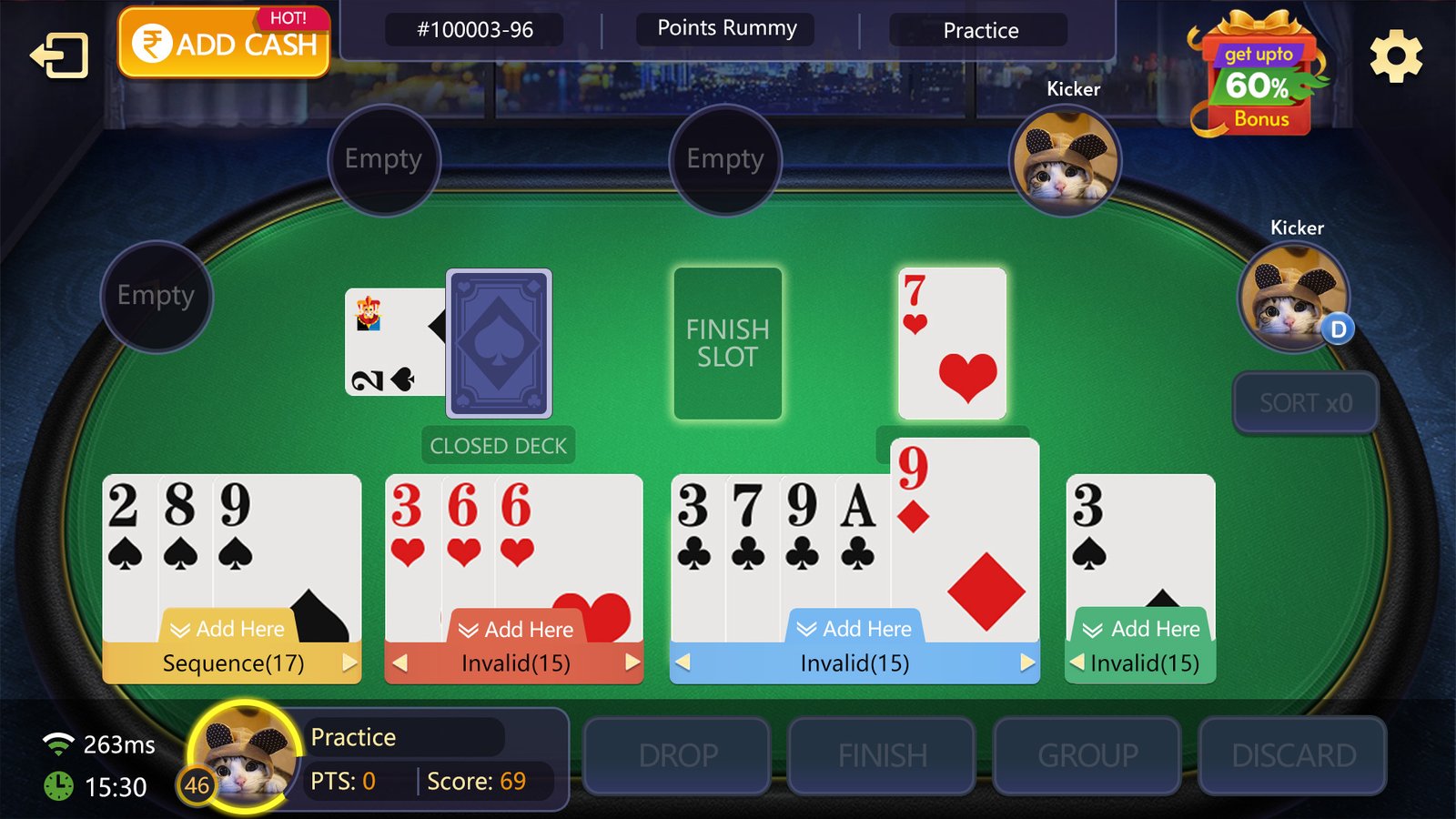
The rummy game is a classic card game that combines observation, planning, memory, and smart decision-making. It has been played in different forms for generations and has become especially popular on smartphones and online gaming platforms.
Unlike games that depend entirely on luck, rummy requires players to continuously make choices. Every card you pick and discard can affect the direction of the game. For beginners, understanding the basic structure is the first step toward becoming comfortable with the game.
Whether you are interested in traditional rummy or exploring an online rummy game, learning the fundamentals can help you understand different formats more easily.
What Is a Rummy Game?
Rummy is a card game where players attempt to arrange their cards into meaningful combinations. These combinations are generally called sequences and sets.
In a commonly played 13-card Indian rummy format, players receive 13 cards and try to organize them into valid groups. The objective is normally to complete the required combinations and make a valid declaration according to the particular game’s rules.
A typical winning hand may include:
- A pure sequence
- Another sequence
- One or more sets
- An additional sequence or combination
The exact rules can differ between rummy variations, so players should always check the rules of the specific table or platform.
How Does Rummy Work?
The basic gameplay follows a simple cycle.
A player receives cards and then takes turns drawing and discarding. During each turn, the player chooses a card that may help complete a combination and removes another card that appears less useful.
This process continues as players organize their hands.
The interesting part of rummy is that players have incomplete information. You know your own cards, but you don’t know exactly what other players are holding. Watching the cards they pick and discard can therefore become an important part of gameplay.
Understanding Sequences
Sequences are among the most important elements of a rummy game. Also read: Matka 420 and Tara Matka: Complete Guide to Online Number Prediction Trends
A pure sequence consists of consecutive cards belonging to the same suit.
For example:
5♥ – 6♥ – 7♥
This is a straightforward pure sequence.
An impure sequence can include a joker replacing a missing card, depending on the applicable rules.
For example:
8♣ – 9♣ – Joker – J♣
The joker can represent the missing 10♣.
For beginners, learning to identify possible sequences quickly is one of the most useful skills.
What Is a Set in Rummy?
A set consists of cards with the same numerical or face value but different suits.
For example: Also read: Slot Games: The Ultimate Guide to Online Slot Entertainment
K♠ – K♥ – K♦
These cards have the same rank but belong to different suits.
Players try to combine their cards into the required number of valid sequences and sets before declaring.
Why the First Few Turns Matter
The opening turns can influence the rest of a rummy game.
When your cards are dealt, don’t immediately decide that every card must be kept. Instead, look at the hand as a whole.
Ask yourself:
- Which cards already form combinations?
- Which cards could become a sequence?
- Do I have a possible pure sequence?
- Which high-value cards are currently isolated?
- Which cards could become useful if another card appears?
This initial assessment can help you create a clearer plan.
Choosing Cards Carefully
Card selection is an important part of the game.
Suppose you have:
6♦ – 7♦
If you later receive 5♦ or 8♦, you could develop a useful sequence.
On the other hand, an isolated card with little connection to your existing hand may have limited value. Also read: Understanding the Popularity of Online Matka Platforms
Good players continuously reassess their cards rather than following one fixed plan from beginning to end.
The Importance of Discarding
Discarding is just as important as drawing.
A common beginner mistake is to keep too many cards because they might become useful later. The problem is that holding unnecessary cards can prevent you from efficiently organizing your hand.
Before discarding, consider whether the card could contribute to:
- A pure sequence
- An impure sequence
- A set
- A possible future combination
You should also consider what information your discard might reveal to another player.
Different Types of Rummy Games
The term rummy game covers several formats.
Points Rummy
Points rummy is generally designed for shorter rounds. Cards are assigned point values according to the particular game’s scoring system.
Pool Rummy
Pool rummy usually involves multiple rounds and an elimination threshold. Players aim to keep their score below the applicable limit.
Deals Rummy
Deals rummy uses a fixed number of deals. Players compete using chips or points, with the final result determined after the designated deals.
Each format has its own pace and scoring approach, making it useful to learn the rules before joining a new table.
Online Rummy Game Experience
The internet has transformed how people access card games. Instead of needing friends or family members physically nearby, players can use online platforms to find opponents and different rummy formats. Also read: Unlocking the Secrets of Kalyan Final Ank and Tara Matka: A Guide to India’s Popular Satta Games
An online rummy game may provide features such as:
- Multiple game formats
- Mobile access
- Player matchmaking
- Game history
- Promotional offers
- Different table options
- Account and payment features
However, players should evaluate an online platform carefully before using it, particularly when real money is involved.
Rummy Game Bonuses
Some online rummy platforms advertise rummy bonuses for new or existing users. These offers may include promotional credits, welcome benefits, or other incentives.
A bonus should always be evaluated alongside its terms.
Check whether the offer has:
- A minimum deposit
- A usage requirement
- An expiry period
- Specific game restrictions
- Withdrawal conditions
- Verification requirements
A large advertised bonus does not necessarily mean it provides the best overall value.
Rummy Strategy for Beginners
There is no guaranteed formula for winning every rummy game, but beginners can develop better habits.
Prioritize a Pure Sequence
In formats where a pure sequence is required, looking for one early can be a sensible starting point.
Organize Your Cards
Keep cards grouped by suit and potential combinations. Organization makes it easier to recognize opportunities.
Watch the Discard Pile
The discard pile can provide clues about the cards other players may or may not need.
Avoid Unnecessary Risks
Don’t keep disconnected cards simply because they might become useful later. Reassess your hand after every few turns. Also read: Teen Patti Master
Think About Your Opponent
Rummy isn’t only about building your own hand. Pay attention to the cards other players are collecting and discarding.
Common Mistakes New Players Make
Many beginners make similar mistakes during their first few games.
One mistake is holding high-value cards for too long. If these cards do not become part of useful combinations, they can increase potential losses in scoring formats.
Another mistake is ignoring the pure sequence requirement. Players sometimes focus on creating sets while forgetting that a pure sequence may be necessary for a valid declaration.
A third mistake is discarding without thinking about opponents. A card that is useless to you could be exactly what another player needs.
Responsible Online Play
If you choose a real-money rummy game, responsible participation is essential.
Set a spending limit before playing and never use money that you cannot afford to lose. Avoid chasing losses and take breaks when needed.
Also check the laws and eligibility requirements applicable to your location. Online gaming regulations can differ between jurisdictions and may change over time.
Final Thoughts
A rummy game is easy to start but can take considerable practice to understand well. The basic concept revolves around arranging cards into valid sequences and sets, but the decisions made during drawing and discarding make every round different.
For new players, the best starting point is to learn the rules, understand pure and impure sequences, recognize sets, and practice organizing cards efficiently.
Whether you prefer traditional card play or an online rummy game, focus on understanding the format rather than simply chasing quick results. And if real-money play is involved, always check the applicable rules and play responsibly.